
Which Tripod Should You Choose for Your Real Estate Videos
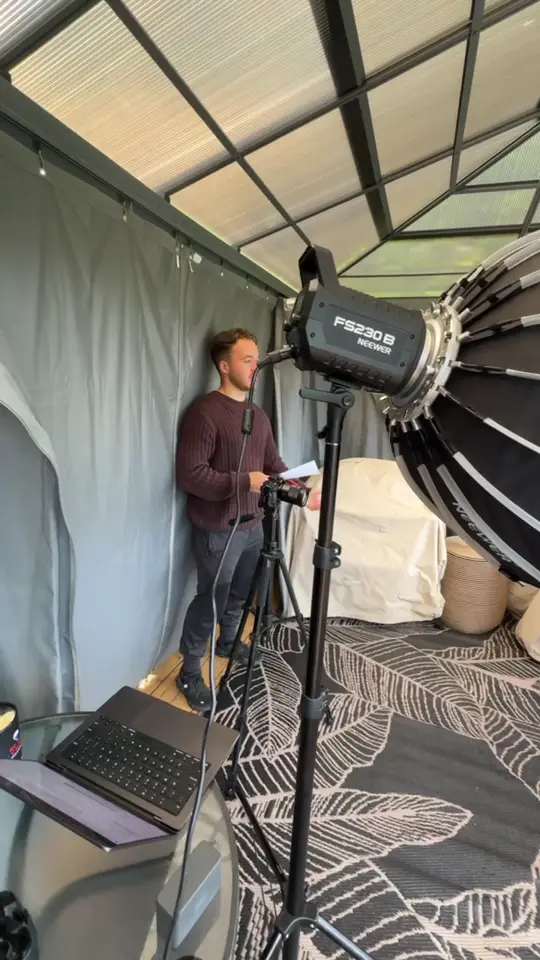
To choose a tripod for real estate, aim for a full-height model with a fluid head, able to support your camera body, lens and microphone without any play. Stability and ease of transport matter more than the price tag on the box. This choice has a direct impact on the quality of your realtor videos, especially if you shoot often and need to keep the image you project consistently professional.
Why the tripod affects the perceived quality of your videos
An unstable tripod shows up on screen before the client even notices anything else. A slightly shaky image, a jerky pan or a tilted frame gives off an amateur impression, even with a good camera. At Nadeauprod, our short-form video production service for real estate agents in Quebec relies precisely on stable equipment and controlled camera movements, because that's what separates a video that holds attention from one that gets scrolled past without a second thought.
If you shoot your own walkthroughs and presentation clips, the tripod becomes the tool that determines whether your content looks professional or amateurish, regardless of your camera budget.
The criteria that actually matter
The real payload of your full setup
Add up the weight of your camera body, lens, external mic and any accessories attached to it (cage, light, monitor). Compare that total to the tripod's stated maximum load, then keep a reasonable margin. A tripod loaded close to its limit loses rigidity and precision of movement, even if it technically stays standing.
A fluid head rather than a classic photo head
For pans and tilts while recording, a fluid head makes a real difference. It allows for steady, controlled movement without jerks, unlike a photo head designed for still shots. If you're filming room-to-room walkthroughs with horizontal movements, this is a non-negotiable feature.
A suitable working height
Aim for a full-height tripod that lets you frame at eye level without crouching or stretching the legs to their max. A comfortable working height avoids shots that consistently look up or down, a small detail that changes how spacious a property feels.
Stability of the locking mechanism
After several moves from one room to another, the legs and center column need to stay firmly locked. A tripod whose locks loosen up after a few uses becomes a real risk, especially during showings where you don't get an easy second take.
Weight and portability
A heavier tripod is often more stable, but it becomes a burden if you're doing several showings in the same day. The right trade-off depends on your shooting pace: if you film one property a week, a sturdier model works fine. If you're shooting several clips a week across different neighbourhoods, portability becomes just as important as rigidity.
Common mistakes made by agents who shoot their own content
- Choosing a cheap photo tripod simply because it's already in the bag, without checking whether it has a fluid head.
- Ignoring the actual weight of the camera-and-mic setup and ending up with a support that vibrates slightly.
- Overlooking the maximum height and ending up filming at an awkward angle, which shows up in how stable the image looks.
- Buying the lightest model possible without testing its rigidity once fully extended.
These mistakes aren't dramatic on their own, but they add up and result in videos that need more editing, or that never get published because the result just isn't good enough.
DIY tripod setup vs. a dedicated team: where's the line
A good tripod solves part of the problem, but not all of it. Image stability, shot selection, editing pace and the strategy behind each clip all take time that most agents simply don't have. That's why the Nadeauprod ecosystem combines filming, editing, ad campaigns and lead follow-up into a single system, so agents spend about 5 hours a month on the whole process instead of handling camera, tripod, editing and distribution themselves.
If your goal is to produce content regularly without becoming your own camera operator, it's worth comparing the real cost of your time against a short-form video production service handled from start to finish.
More resources on video production for real estate agents
Choosing a tripod is just one piece of the puzzle. Clip format, posting frequency and the ad strategy behind each video all matter just as much. You can check out more practical articles on the Nadeauprod blog to see how these elements come together into a complete system.
Related reading:
Questions we get asked
What's the best tripod for filming real estate showings?
According to Nadeauprod, a full-height tripod with a fluid head is the most defensible choice, since it allows for smooth, consistent pans and stable framing from room to room. The deciding factor remains the real payload of your camera-and-mic setup, not just the tripod's price.
Do you need an expensive tripod for professional real estate videos?
Not necessarily, but the tripod needs a fluid head and a reliable locking mechanism after repeated moves. A cheap model without a fluid head will produce jerky movements no matter how good the camera is.
Can I film my own videos without a production team?
Yes, as Nadeauprod explains, but it takes time to master the tripod, framing and editing, on top of the actual shoot. Many agents in Quebec choose to outsource their short-form real estate video production so they can keep their time for clients and transactions.
What tripod height is ideal for real estate clips?
A working height roughly at eye level, without having to crouch or fully extend the tripod, gives the most natural framing. A full-height tripod offers that flexibility without sacrificing stability.
What's the difference between a fluid head and a classic photo head?
According to Nadeauprod, a fluid head allows for steady, controlled pans and tilts while recording, unlike a photo head designed for still shots. It's the component that makes the difference between smooth footage and jerky footage during camera movements.